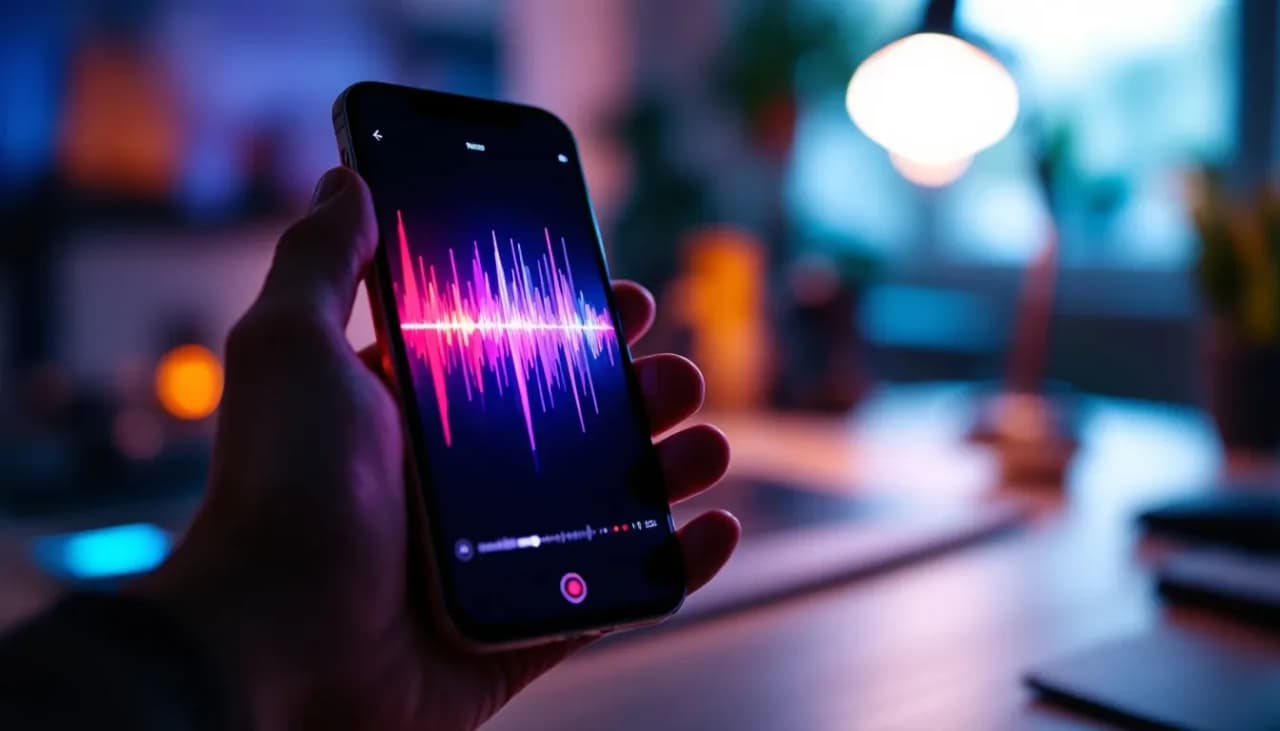
Voice AI Revolution: How Machines Now Read Your Emotional State in Real-Time
May 29, 20266 min read1
I've been tracking voice AI for years, but what's happening now genuinely surprised me. These systems don't just transcribe your words anymore — they're reading the emotional subtext in real-time. Your stress, excitement, uncertainty — it's all there in your voice patterns, and AI is getting scary good at picking it up.
The accuracy rates are wild. Modern systems analyze over 7,000 voice parameters and hit 98% accuracy on emotion detection. That's better than most humans. And honestly? It's both impressive and kind of unsettling when you think about what this means for high-pressure situations like crypto trading.

Beyond Words: How Voice AI Reads Your Emotional State
Remember the last time you were stressed during a market crash? Your voice probably betrayed you before your words did. That's exactly what these AI systems exploit. They're analyzing three layers simultaneously:
- Voice Pattern Analysis: Tone, rhythm, pitch variations, speaking pace, and vocal intensity
- Text Analysis with NLP: Speech-to-text conversion with emotional keyword detection
- Combined Analysis: Cross-referencing vocal tones with actual words for 40% better accuracy
Here's the part that got my attention: these systems detect micro-pauses, breathing patterns, even tiny vocal tremors that indicate stress or excitement. When Bitcoin hit $100k, I bet these systems could've spotted the FOMO in traders' voices before they even knew they were feeling it.
Technical Breakdown
Advanced speech recognition systems achieve 91-98% accuracy in real-time emotion detection by processing thousands of voice parameters simultaneously, including spectral features, prosodic patterns, and linguistic markers.
The Machine Learning Revolution Behind Sentiment Analysis
Companies like Hume AI are doing things I didn't think were possible yet. Their research shows empathic AI can distinguish between nervous excitement and genuine confidence — subtle emotional differences that matter when you're making split-second trading decisions.
The training process fascinates me. These systems learn from massive voice datasets, building emotional pattern recognition across different languages, accents, and cultures. They're not just analyzing American traders — they're learning how humans express emotions globally. That's incredibly powerful for international exchanges.
“Historical data training allows AI systems to recognize industry-specific emotional patterns, achieving specialized accuracy rates for different sectors including financial services.”
Crypto Trading Applications: When AI Reads Market Emotions
This is where things get interesting for traders. Picture a voice-activated platform that detects when you're making emotional decisions. Your AI could literally intervene when it hears panic in your voice, reminding you about your stop losses or position sizing rules.
Major exchanges are already testing this in customer support. During market crashes, voice emotion recognition helps support teams identify genuinely distressed users versus casual information seekers. The 98% accuracy means fewer misunderstandings when someone's portfolio is bleeding and they're calling for help.

Blockchain Security Implications: Voice Authentication 2.0
Voice emotion recognition is changing blockchain security in ways I hadn't considered. Traditional voice auth relies on vocal patterns, but emotional cues add another layer that's much harder to fake. You can't easily replicate someone's micro-emotional responses under pressure.
Consider this scenario: someone's trying to access your wallet under duress. Their voice carries stress markers that standard authentication might miss. The AI detects this and triggers additional security protocols. We're moving beyond "what you know" and "what you have" to "how you sound when you're actually you."
Privacy Considerations
While voice AI technology offers powerful capabilities, traders should be aware that emotional voice data represents a new form of biometric information that requires careful handling and secure storage protocols.
What This Means for Traders Right Now
ChatGPT's Advanced Voice Mode already hints at this technology's potential. Users choose voice interaction when they want emotional connection, and the AI responds with more nuanced emotional expression. It's not perfect, but the foundation is solid.
For traders, this opens up possibilities that genuinely excite me. Voice-activated portfolio management that adapts to your emotional state. AI trading assistants that sense when you're about to revenge trade and talk you down. Customer support that actually understands the stress of watching your portfolio tank during a flash crash.
The development speed is accelerating. What took years in traditional speech recognition is happening in months with emotional AI. My prediction? Major exchanges will integrate voice emotion recognition within two years. The real question is whether we're ready to trade alongside AI that understands our emotional patterns better than we do.
TradingMarket AnalysisRisk Management
Was this article helpful?
Share