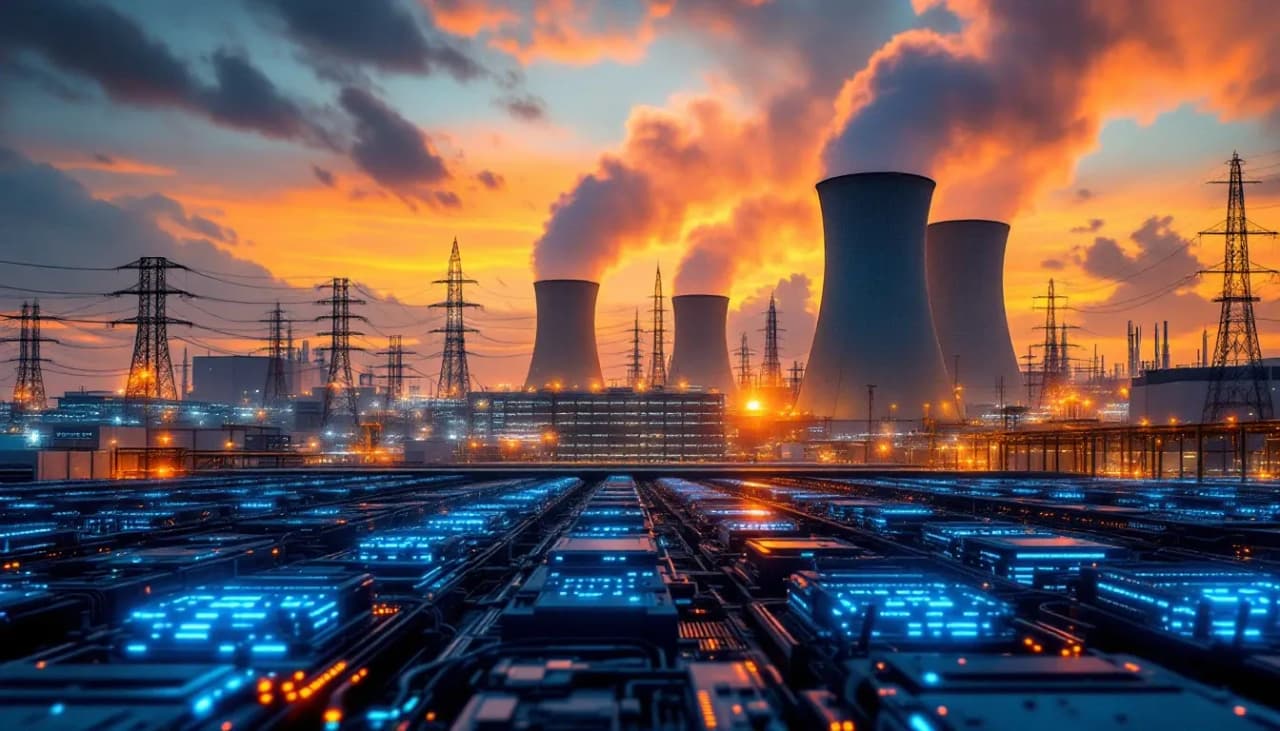
Bitcoin Mining Data Centers Pivot to AI: The $70B Infrastructure Play
May 27, 20266 min read1
I've been watching this shift for months, and it's finally happening at scale. Bitcoin miners are making the biggest infrastructure bet I've seen since the industry started — they're throwing over $70 billion at AI data centers. It's actually brilliant, if risky.
The economics are harsh but clear. Mining margins are getting crushed while AI compute demand is exploding. These companies already own the two things AI desperately needs: massive power setups and industrial cooling. Some miners think AI will represent 70% of their revenue by year-end. That's not diversification anymore — it's a complete business flip.

The Infrastructure Match: Why Mining Facilities Work for AI
I've walked through dozens of mining operations, and the overlap with AI requirements is almost perfect. These aren't just warehouses with computers — they're purpose-built for high-density computing with industrial power delivery, serious cooling, and redundant network connections.
HIVE's got 675 MW of capacity across North America. They're not just mining anymore — five dedicated HPC centers are running, plus a GPU cloud platform. Those facilities in Sweden and Iceland that used to mine Ethereum? All AI workloads now. They even built software to flip GPUs between mining and AI depending on which pays better that day.
Power Requirements Reality Check
AI data centers need as much or more power than mining operations. A single H100 GPU cluster can consume 10-40 MW, while a typical mining farm uses 20-100 MW. The infrastructure overlap is perfect.
The Big Players Making Moves
Riot Platforms just hired financial advisors to explore what they can do with 600 MW of spare capacity at their Corsicana, Texas facility. That's one of the largest data centers in the US, sitting outside Dallas. Their CEO called it a "rare offering." When you've got that much power available and AI companies are paying premium rates, the choice is obvious.
CleanSpark's stock jumped 11% Monday when they announced their AI push. They hired Jeffrey Thomas as SVP of AI data centers — this guy ran Saudi Arabia's multi-billion AI data center program. That's not a hire you make for a small experiment.
“Together, we have a tremendous opportunity to deliver exceptional solutions for our customers while creating long-term value for shareholders and positioning CleanSpark at the center of the AI and intelligent computing revolution.”
What This Means for Bitcoin and Mining Stocks
The market's already pricing this transition. CleanSpark is up 137% this year, and that's not just Bitcoin momentum. Investors are valuing these as infrastructure companies, not just mining operations. AI hosting margins beat mining by a wide margin — steady revenue contracts versus the constant volatility of block rewards.
But here's what gets interesting — this could actually help Bitcoin long-term. Instead of miners constantly selling coins to cover costs, AI revenue gives them steady cash flow. Less sell pressure, more holding. Some of these operations might drastically cut their Bitcoin selling.

The Problems Nobody's Talking About
Not every mining facility can make this jump. AI needs specific cooling, network redundancy, and different power systems. You can't just replace ASICs with GPUs and call it done. These facilities need serious retrofitting — liquid cooling, fiber connections, redundant power supplies.
The bigger risk? AI demand could crash faster than crypto did in 2022. These companies are betting billions on sustained AI hype. If training costs drop or efficiency gains reduce compute demand, miners could end up with expensive facilities and no customers. It's happened before.
Investment Risk
Mining companies pivoting to AI are making billion-dollar bets on sustained AI demand. This could create new revenue streams or leave them with stranded assets if AI compute demand shifts.
My Read: The Infrastructure Play of the Decade
This shift is happening whether we like it or not. The companies that nail this transition become infrastructure giants. Those that don't will struggle as pure miners with shrinking margins.
From a trading angle, I'm watching miners with the best power contracts and existing cooling infrastructure. HIVE, Riot, and CleanSpark are obvious plays, but smaller miners with strategic locations could see massive revaluations if they execute well.
The $70 billion going into this isn't just diversification — it's survival. And weirdly, it might be the best thing to happen to Bitcoin mining since ASICs were invented.
BitcoinMarket AnalysisTechnical Analysis
Was this article helpful?
Share
Frequently Asked Questions
- What is the current price and market cap of AI Starter?
- What are digital markets and how do they differ from traditional markets?
- What are the most important indicators to use with price charts?
- How can I use price charts to predict future crypto movements?
- What do candlestick colors mean on a crypto price chart?